Spider control in Chandler addresses native arachnids such as the western black widow (Latrodectus hesperus) and the Sonoran desert wolf spider, both of which gravitate toward the moisture-rich microclimates of…
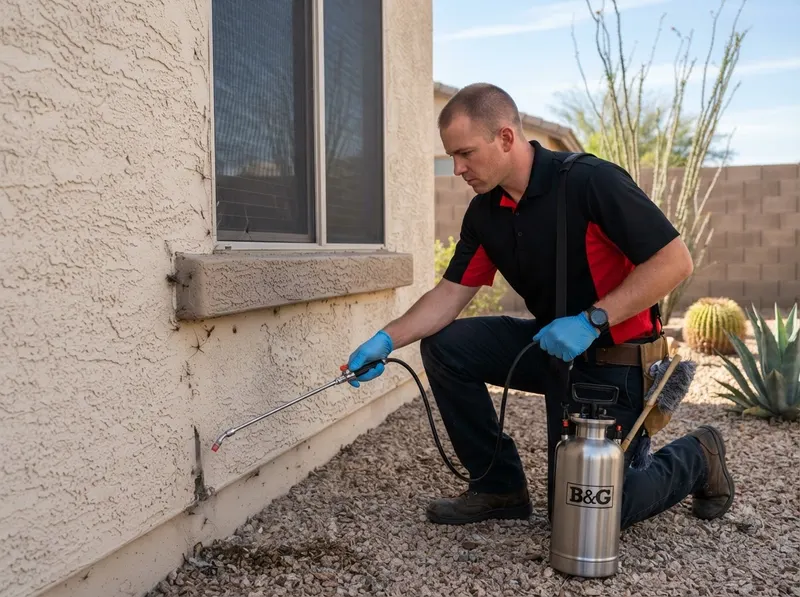
Spider control in Chandler addresses native arachnids such as the western black widow (Latrodectus hesperus) and the Sonoran desert wolf spider, both of which gravitate toward the moisture-rich microclimates of irrigated turf, perimeter decorative rock, and exterior expansion joints. In neighborhoods like Ocotillo, Fulton Ranch, and Andersen Springs, artificial lakes and high-output drip irrigation systems sustain large populations of prey insects including crickets and sewer roaches, creating sustained food corridors directly toward foundational weep screeds. A specialized spider control service differs substantially from general surface spraying because spiders feature elevated bodies and non-porous leg hairs (tarsi) that do not absorb dried liquid residual insecticides off concrete flatwork; remediation demands direct contact microencapsulated products combined with pyrethroid dust placed directly within block-fence voids and foundation voids where females construct retreat webs.
Selecting a dedicated structural exclusion protocol fits single-family properties encountering multiple widow webs along stucco pop-outs or underneath exterior patio furniture, whereas homes experiencing single incidental wolf spiders after monsoon rains may simply require localized door sweep upgrades and window-screen mesh maintenance. The operational trade-off centers on physical habitat alteration versus recurrent perimeter maintenance; homeowners who choose comprehensive weep-screed mesh installation and vegetation trimming along block walls reduce ongoing chemical dependence, though it requires initial labor to pull decorative granite away from concrete footings by 6 to 12 inches. Properties in older subdivisions near the Downtown Chandler Historic District or larger-lot communities like Circle G at Riggs Homestead often feature extensive cinder-block property walls containing thousands of hollow cell openings that serve as daytime harborages, requiring high-volume power dusting rather than simple hand-pump aerosol sweeps.
1. Technicians conduct a 360-degree foundation assessment, examining stucco weep screeds, utility entry penetrations along exterior air conditioning lines, and ground-level window wells across Carino Estates, Sun Groves, or Clemente Ranch properties.
2. Exterior crews physically remove egg sacs and structural webs using specialized poly brushes extended up to 20 feet, eliminating immediate hatch risks before eggs yield several hundred spiderlings.
3. Technicians inject botanical or synthetic pyrethroid dust into structural void points, including block-fence caps, stucco weep screeds, and weep-hole vents along brick veneer.
4. Crews apply a 3-foot vertical and 5-foot horizontal perimeter residual liquid band around the entire exterior slab, establishing a chemical barrier that stops desert beetles and crickets from providing an active food source.
5. If interior activity is present in garages or utility closets, targeted low-toxicity spot treatments isolate baseboard transitions using materials approved for use around companion animals once dried.
Every job gets a firm, written price after a free on-site visit.
Tell us about your spider control job in Chandler and we'll send a clear, written quote, usually the same day.
 Desert Sparrow Pest Control