Pest control service in Chandler protects residential properties from invasive Sonoran desert species that breach structural perimeters during intense seasonal heat shifts. The local environment forces bark scorpions, subterranean termites, and roof rats toward indoor plumbing voids, irrigated yards, and attic crawlspaces throughout the year.
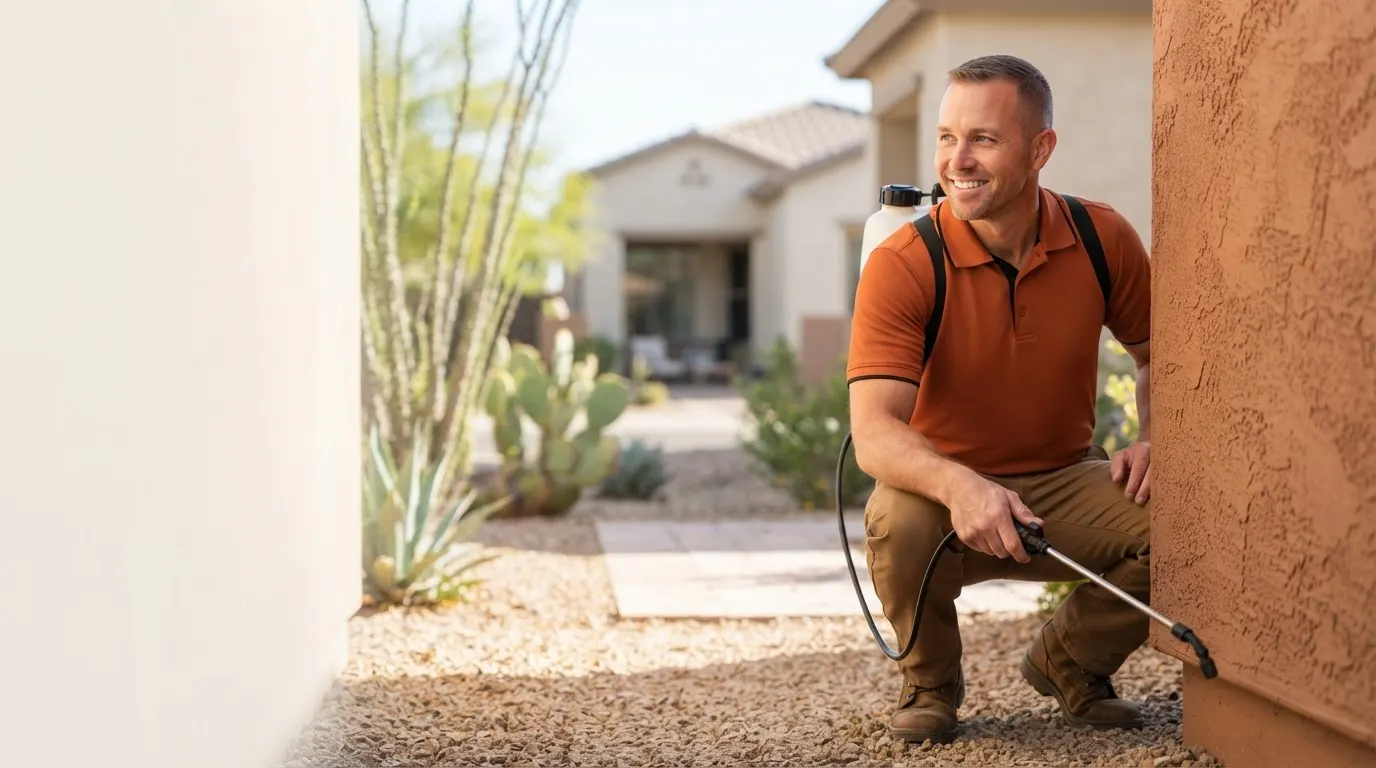
Pest Control Service in Chandler is an integrated management protocol combining exterior physical exclusion, foundation weep screed treatments, and interior barrier applications to eliminate desert target species across Maricopa County residences.
Every service reflects the same meticulous attention to detail, whether it's a single job or a larger pest control service project across Chandler.
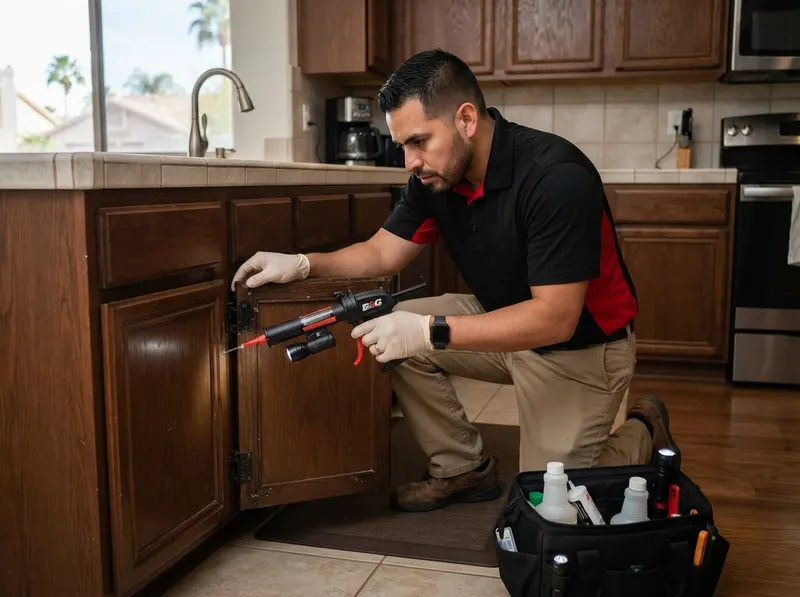
Methodical cockroach remediation targets both German interior infestations and exterior sewer-dwelling American cockroaches (Periplaneta americana). Technicians apply non-repellent insect growth regulators (IGRs) within wet plumbing wall chases, followed by targeted bait matrices behind heavy cabinetry and mechanical crack-and-crevice dusting. This multi-stage process arrests the reproductive egg-cycle and purges structural harborage without contaminating food preparation surfaces. Outdoor perimeter treatments along sewer cleanouts and water meter boxes halt massive outdoor populations before nocturnal migrations penetrate exterior door sweeps or expansion joints.
Get a quote →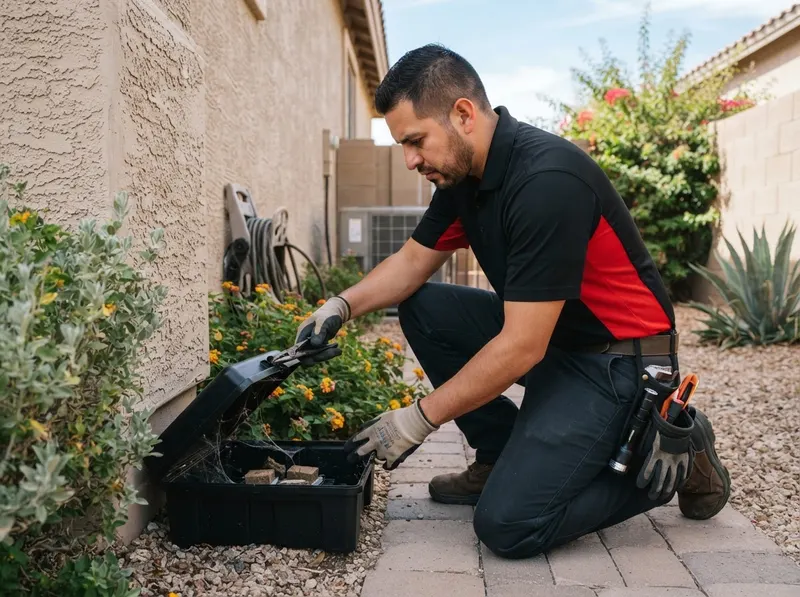
Sonoran roof rat (Rattus rattus) remediation centers on complete mechanical home exclusion and interior attic population removal. Technicians seal roofline fascia gaps, air conditioning conduit penetrations, and tile roof valleys using 1/4-inch heavy-gauge galvanized hardware cloth and metal flashing. Interior mechanical snap-trap systems eliminate existing rodents within 48 to 72 hours, avoiding secondary poisoning risks to neighborhood pets or predatory desert wildlife like owls and red-tailed hawks. Thorough attic inspections pinpoint soiled insulation voids requiring localized sanitation and pheromone neutralization.
Get a quote →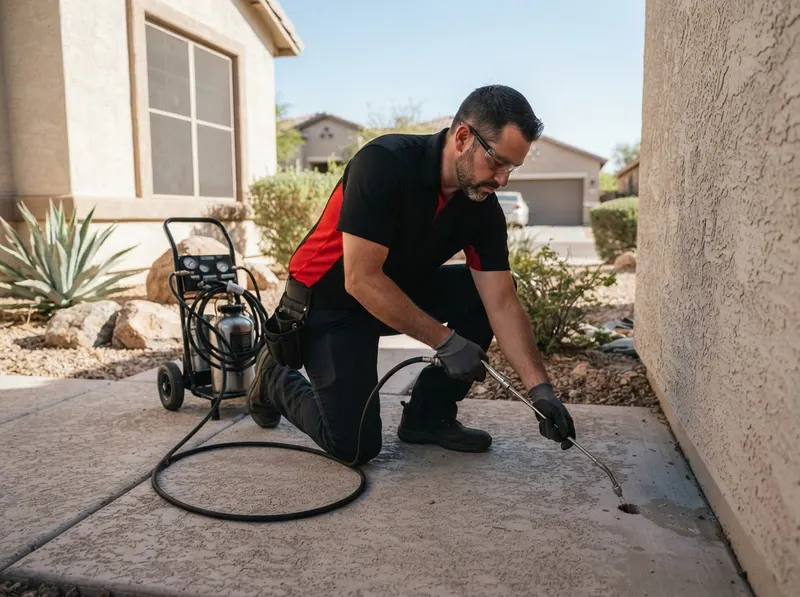
Heterotermes aureus subterranean termite management utilizes continuous stem-wall trenching and concrete sub-slab injection. High-volume non-repellent termiticides bind directly to the dry soil substrate along the entire foundation perimeter, allowing foraging worker termites to track the active agent back to subterranean nursery chambers without detecting the perimeter boundary. Technicians precision-drill concrete expansion joints, patios, and post-tension slabs where exploratory mud tubes bridge structural wood framing. Every application adheres strictly to Arizona Department of Agriculture structural pest management standards.
Get a quote →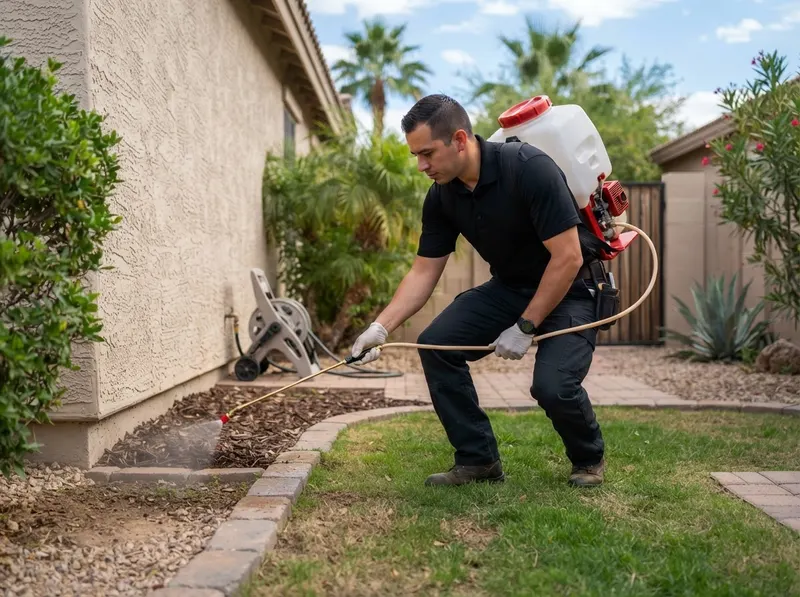
Rhipicephalus sanguineus (brown dog tick) treatments require synchronized indoor baseboard void applications and exterior shade-line treatment. Micro-encapsulated adulticides paired with synthetic juvenile hormone analogues eliminate adults while rendering emerging eggs sterile across carpet pile and furniture bases. Outside, technicians treat artificial turf seams, exterior block wall crevices, gravel transition strips, and shaded pet resting zones to eradicate multi-stage infestations that thrive in high ambient temperatures.
Get a quote →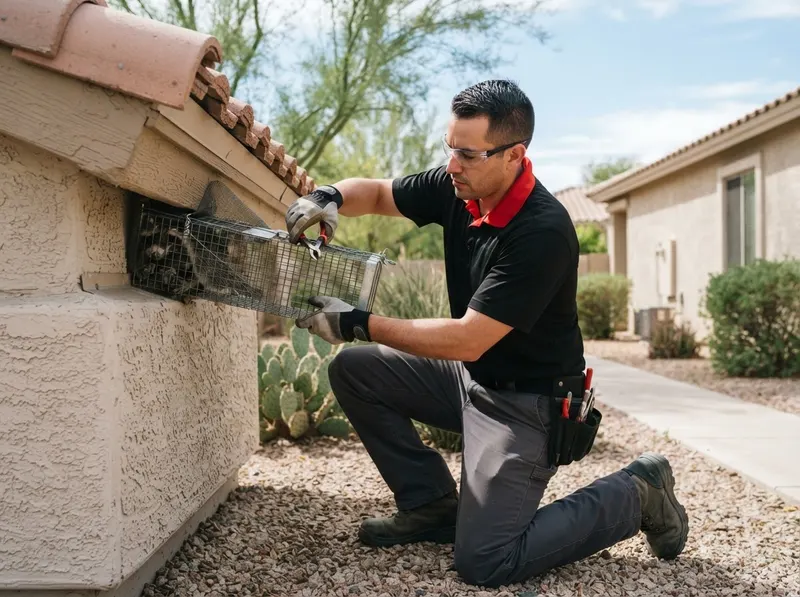
Desert wildlife intervention provides humane, non-lethal eviction of raccoons, striped skunks, and ringtail cats nesting in residential crawlspaces, pool equipment sheds, or foundation cavities. Technicians install heavy-duty one-way directional exclusion doors and rigid structural wire barriers, allowing animals to safely vacate without property damage. Once confirmation sensors verify the void is completely clear, entry portals are permanently armored with 16-gauge galvanized steel backing to prevent recurring intrusions during subsequent mating seasons.
Get a quote →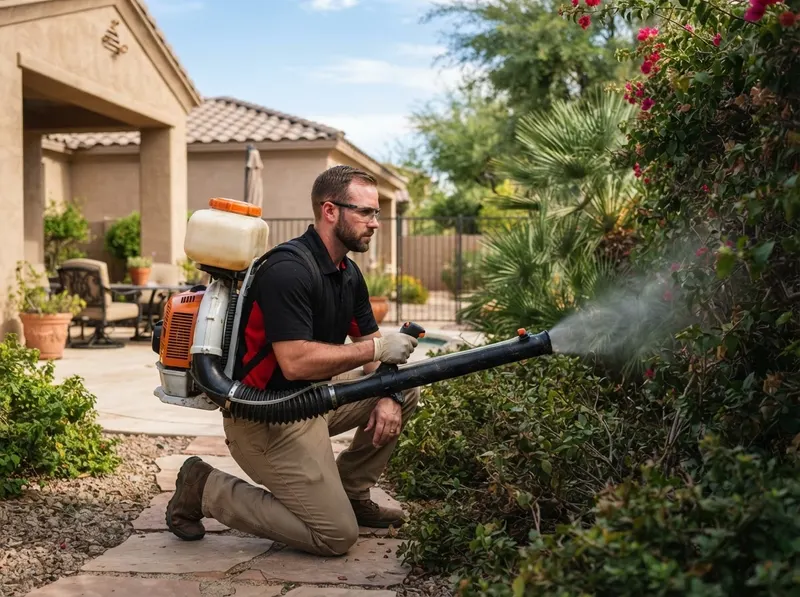
Mosquito mitigation neutralizes Aedes aegypti breeding cycles supported by residential automated drip systems, landscape retention basins, and dense shade shrubbery. Automated fine-droplet mister applications deposit botanically derived residual treatments to foliage undersides where adult mosquitoes rest during extreme midday heat. Simultaneously, non-toxic bacterial larvicides (Bacillus thuringiensis israelensis) are placed directly into standing water catchments, ornamental fountains, and drainage sumps, dramatically reducing adult biting populations without impacting pollinators.
Get a quote →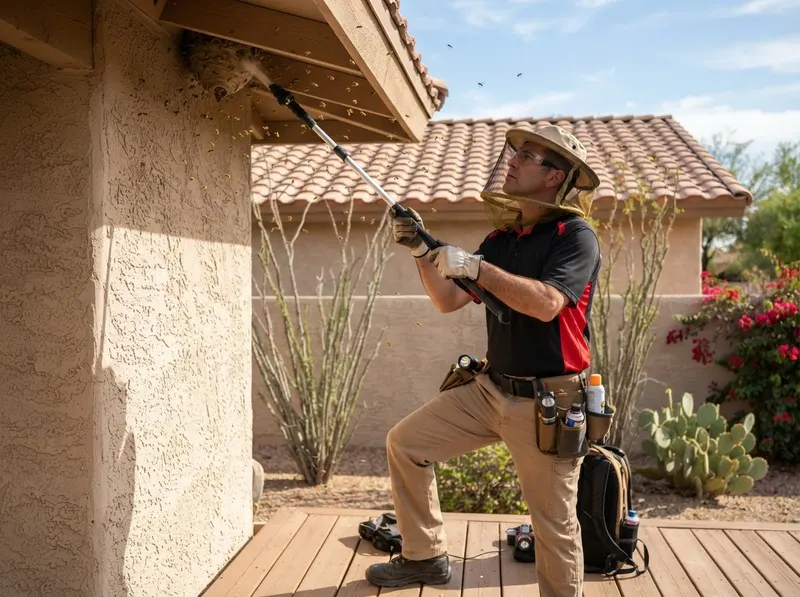
Specialized removal protocols eliminate dangerous paper wasp clusters and aggressive Africanized honeybee swarms from parapet walls, irrigation valve boxes, and structural attic vents. Technicians employ protective isolation gear and direct knockdown aerosols to neutralize flying stinging insects immediately upon arrival. Technicians subsequently scrape wax combs, brood frames, and pheromone traces from wall voids, applying residual deterrent dusts to prevent scout bees from re-occupying the exact structural void in future seasons.
Get a quote →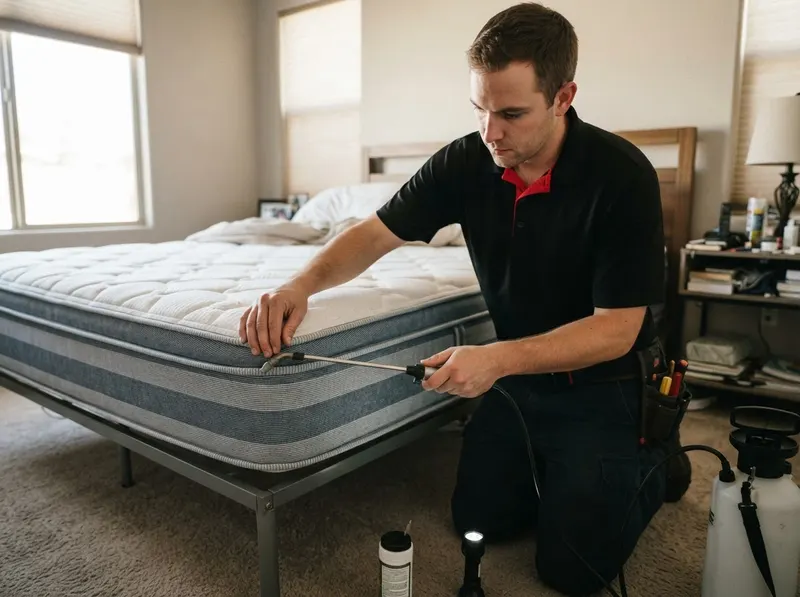
Cimex lectularius eradication utilizes dual-stage structural thermal containment or high-pressure targeted residual applications. Technicians systematically treat mattress piping, box spring internal frames, electrical outlet boxes, and carpet perimeter tack strips. Every life stage, from microscopic viable eggs to reproductive adults, is neutralized through complete contact exposure, backed by mandatory 14-day perimeter follow-up scans to confirm total structural elimination across all bedrooms.
Get a quote →You get a firm, itemized quote for your pest control service before any work begins, no surprises, no pressure.
Careful prep, tidy work, and a full cleanup when we are done. We treat your home and belongings like our own.
The same trusted, background-checked team from the first call to the final check.
Selecting the proper defense profile depends on target pest morphology and property boundary dynamics. If a home exhibits recurring interior sightings of bark scorpions or desert spiders, choose exterior foundation micro-encapsulation combined with weep screed dusting; this arrests vertical climbing before arachnids contact exterior wall cracks. If subterranean termite mud tubes appear along a concrete stem wall, select a dedicated non-repellent liquid trenching or precision drill treatment; topical sprays fail because worker termites move exclusively through hidden subterranean channels.
The trade-off is mechanical intervention and upfront investment versus perimeter longevity: basic topical sprays degrade within weeks under intense Arizona ultraviolet radiation, whereas structured weep-screed screening and non-repellent perimeter trenching require physical installation but deliver multi-season structural protection. For active roof rat nesting in attic insulation near citrus vegetation, prioritize mechanical exclusion over chemical baits: rodenticide alone creates odor risks within sealed soffits, whereas heavy-gauge wire mesh exclusion permanently closes entry apertures while traps clear internal populations. If addressing chronic German cockroach infestations in rental kitchens, choose targeted non-repellent bait matrices and insect growth regulators rather than broadcast pyrethroid foggers; foggers cause gravid females to scatter deep into drywall chases, while baiting leverages horizontal transfer to eradicate hidden colony pockets.
Every project gets a firm, written price after a free on-site visit. Ranges below for orientation.
Tell us about your pest control service job and we'll send a clear, written quote, usually the same day. Or just call and talk to a real Chandler pro.
(877) 714-9707
Chandler homes bordered by extensive lake communities like Ocotillo and Fulton Ranch, or agricultural transitions near Veterans Oasis Park and Bear Creek Golf Complex, experience elevated soil moisture gradients that directly attract subterranean termites and micro-insects. Proximity to expansive greenbelts like Tumbleweed Park accelerates roof rat migration along mature citrus corridors, dense palm fronds, and oleander hedges, while native desert borders near Rawhide Western Town channel bark scorpions along residential mortarless block wall lines. High summer ground surface temperatures exceeding 140°F along asphalt and decorative river rock cause unencapsulated exterior liquid chemical barriers to break down within two to three weeks. In contrast, residential parcels surrounding Andersen Springs and Downtown Chandler Historic District frequently encounter sewer-line American cockroach migrations through older subterranean utility connections during the July monsoon season. Methodical perimeter defense addresses these microclimate variations by matching physical exclusion hardware, UV-resistant micro-encapsulated chemistries, and moisture-stable bait formulations to the specific soil drainage profiles and regional landscape zones across Maricopa County.
Free estimates for Chandler & the surrounding area.
 Desert Sparrow Pest Control